
CBD vs THC: Understanding the Cannabinoids Revolutionizing Wellness
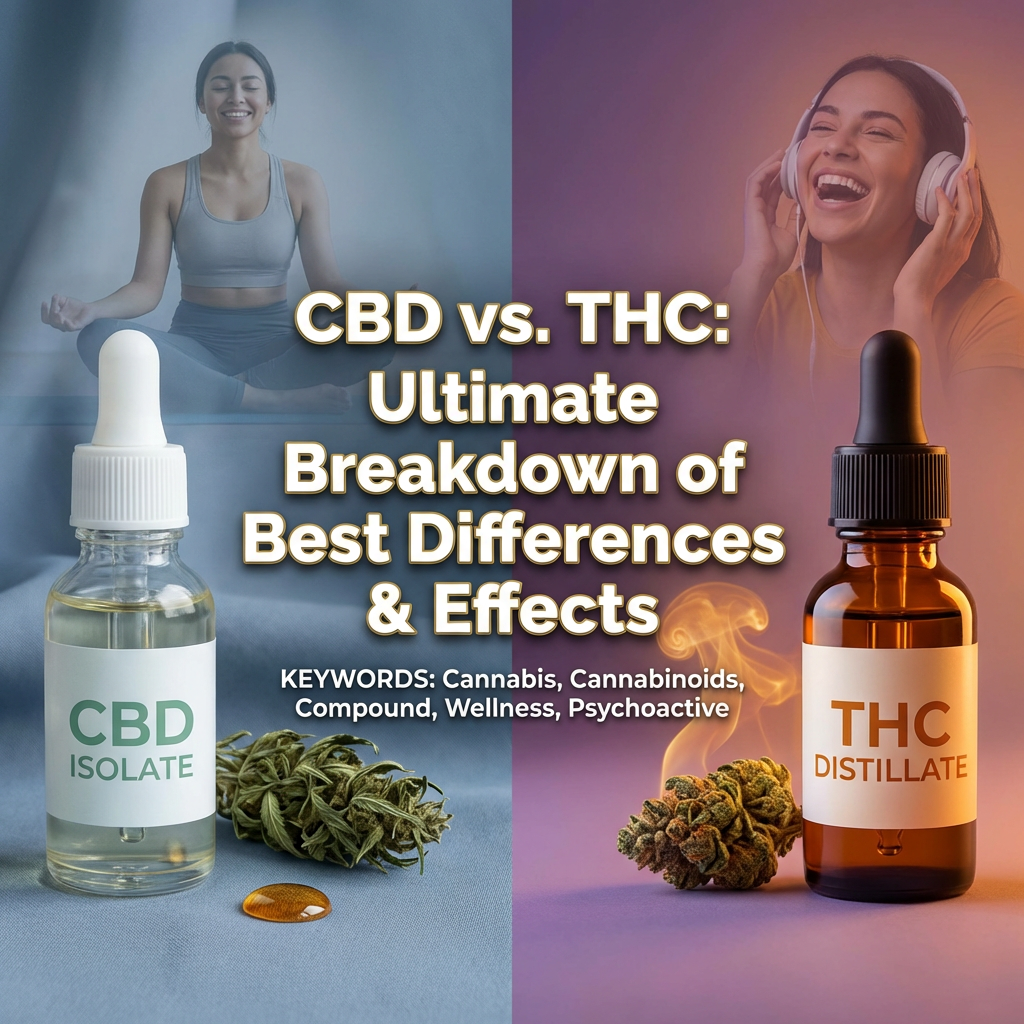
CBD vs THC has become one of the hottest debates in the wellness world, as more people turn to cannabis-derived compounds for relief from pain, anxiety, and sleep issues. These two powerhouse cannabinoids—cannabidiol (CBD) and tetrahydrocannabinol (THC)—offer distinct benefits and experiences, making it essential to know their differences before diving in. Whether you’re a newbie exploring natural remedies or a seasoned user, grasping their unique profiles can help you make informed choices for better health outcomes.
What is CBD?
Cannabidiol, or CBD, is a non-psychoactive compound extracted primarily from hemp plants, a variety of cannabis with low THC levels. Discovered in the 1940s, CBD gained massive popularity after the 2018 U.S. Farm Bill legalized hemp-derived products. Unlike its counterpart, CBD doesn’t produce a “high,” which makes it appealing for everyday use.
CBD works by interacting with the body’s endocannabinoid system (ECS), a network of receptors that regulates mood, pain, inflammation, and more. It influences CB1 and CB2 receptors indirectly, promoting balance without altering consciousness. Common forms include oils, tinctures, gummies, topicals, and capsules, with full-spectrum options containing trace THC for enhanced effects via the “entourage effect.”
Research backs CBD’s potential: A 2019 study in The Permanente Journal found it reduced anxiety in 79% of participants. It’s also promising for epilepsy, with FDA-approved Epidiolex treating rare seizure disorders.
What is THC?
Tetrahydrocannabinol (THC), the star of recreational cannabis, is the main psychoactive compound responsible for the euphoric high. Found in higher concentrations in marijuana plants, THC binds directly to CB1 receptors in the brain, mimicking natural endocannabinoids like anandamide—the “bliss molecule.”
This binding triggers dopamine release, leading to relaxation, altered perception, and appetite stimulation (“munchies”). THC exists in delta-8 and delta-9 forms, with delta-9 being the most potent. Products range from edibles and vapes to flower and concentrates.
Medically, THC shines for chronic pain, nausea from chemotherapy, and multiple sclerosis spasms. Dronabinol (synthetic THC) is FDA-approved for these uses. However, its intoxicating effects limit daytime use for many.
CBD vs THC: Key Chemical and Structural Differences
At a molecular level, CBD vs THC diverges significantly. Both are cannabinoids with similar formulas (C21H30O2), but their atomic arrangements differ. THC has a closed pyran ring, enabling strong CB1 binding and psychoactivity, while CBD’s open structure results in milder, non-intoxicating action.
Origins play a role too: CBD dominates hemp (under 0.3% THC), while THC thrives in marijuana (up to 30%). Extraction methods preserve these profiles—CO2 or ethanol for purity—ensuring legal compliance.
| Aspect | CBD | THC |
|—————–|——————————|——————————|
| Psychoactive | No | Yes |
| Source | Hemp primarily | Marijuana primarily |
| Receptor Binding | Indirect (modulates) | Direct (agonistic) |
| Legality | Federally legal (U.S. hemp) | Varies by state/country |
CBD vs THC: Effects on the Body and Mind
When comparing CBD vs THC effects, the contrast is stark. THC delivers euphoria, heightened senses, and potential paranoia at high doses, lasting 2-6 hours depending on consumption. It’s ideal for evening wind-downs or creative boosts but can impair driving or focus.
CBD, conversely, calms without sedation. It reduces inflammation via serotonin receptors (5-HT1A), easing anxiety and PTSD symptoms. Users report clearer focus and pain relief without fog. A 2020 review in Frontiers in Psychology highlighted CBD’s anti-anxiety edge over THC.
Combined, they synergize: Low-dose THC with CBD tempers highs while amplifying relief, as seen in balanced 1:1 products.
Medical Applications: Where Each Excels
CBD vs THC shines in targeted therapies. CBD leads for:
– Anxiety and depression
– Insomnia (promotes natural sleep cycles)
– Acne and skin conditions (anti-inflammatory)
– Neuroprotection (Alzheimer’s, Parkinson’s research)
THC dominates for:
– Severe pain (neuropathy, cancer)
– Nausea and vomiting
– Glaucoma (lowers eye pressure)
– Appetite loss (HIV/AIDS, cachexia)
Emerging studies explore combos for fibromyalgia, Crohn’s disease, and even COVID-19 inflammation.
Side Effects and Safety Considerations
No compound is risk-free. CBD may cause dry mouth, fatigue, or diarrhea, especially with high doses. THC risks include anxiety, rapid heart rate, dependency, and cognitive dips in heavy users, per NIDA reports.
Drug interactions are key: Both affect cytochrome P450 enzymes, potentially altering meds like blood thinners. Start low (5-10mg), consult doctors, and opt for third-party tested products to avoid contaminants.
Legality and Accessibility in 2023
CBD vs THC legality hinges on source and THC content. Hemp CBD (≤0.3% THC) is federally legal in the U.S., widely available online and in stores. THC remains Schedule I federally but is legal recreationally in 24 states and medically in 38. Internationally, rules vary—legal in Canada, restricted in Australia.
Choosing Between CBD and THC: A Personal Guide
Deciding CBD vs THC depends on goals. Need focus and calm? Go CBD. Crave deep relaxation or nausea relief? THC fits. Hybrids offer the best of both. Track effects with journals, consider tolerance, and prioritize reputable brands like Charlotte’s Web (CBD) or Curaleaf (THC).
In conclusion, CBD vs THC isn’t a battle but a toolkit. As research evolves—with over 100 cannabinoids identified—these duo pioneers wellness. Consult professionals, experiment responsibly, and unlock their potential for a balanced life. (Word count: 912)